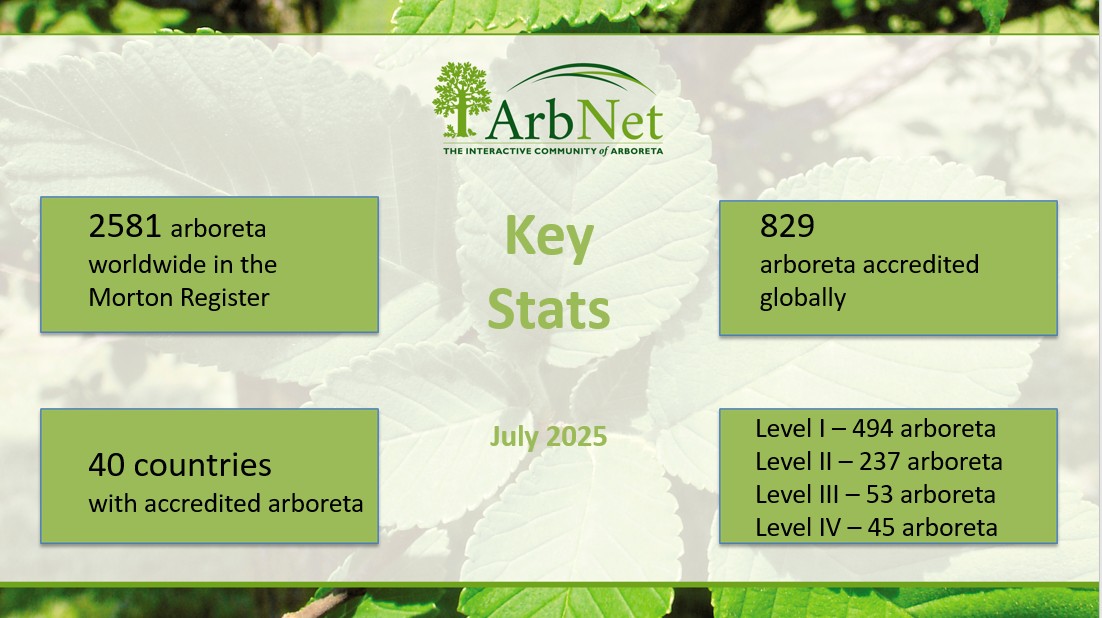
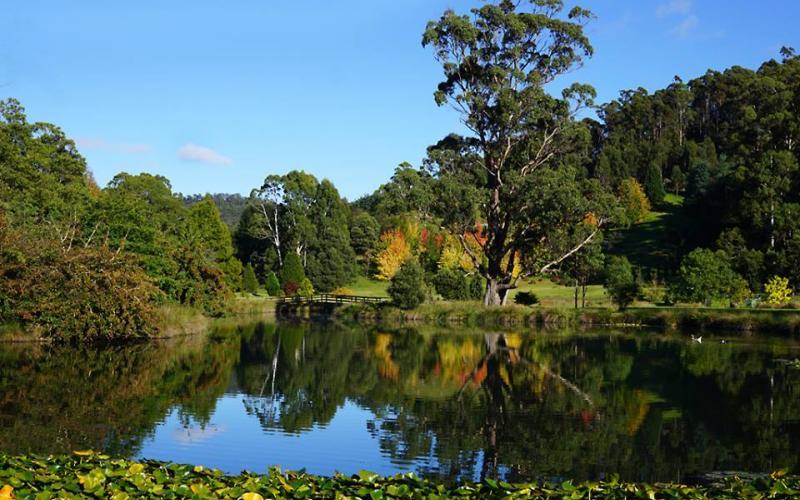

Welcome to ArbNet, the interactive community of arboreta. On future visits to this home page, you'll find arboreta featured from The Morton Register, as well as other enhancements. This website will evolve -- and much of that depends on how you use the site. In addition to the database of arboreta (The Morton Register), there are sections for user interaction, news, events, and resources, such as an accreditation program for arboreta. Please click through and become familiar with this site and what it has to offer you and our shared community of arboreta!
Cox Arboretum Awarded Level II Accreditation
Cox Arboretum, Canton, GA. has been awarded a Level II Accreditation through the ArbNet program. By achieving particular standards of professional practices deemed important for arboreta and botanic gardens, they are now recognized amongst other professional public gardens in the Morton Register of Arboreta.
Here's how Cox Arboretum tells their story:
Cox Arboretum is a private estate located in Canton, Georgia. Canton is approximately 40 miles north of Atlanta in the foothills of the Piedmont Range. Numbering over 4,000 living specimens, the plantings display one of the largest private collections of temperate flora in the United States. With an elevation of 1200 feet and containing several lakes and streams, they are able to grow a wide variety of plants in their zone 7B climate. The property is also bounded by several large wetland habitats where many migratory and native fowl make their home. It is situated on 13 acres in the middle of an old-growth southern deciduous hardwood forest, containing many large Oaks, Hickory, Poplar and Sweetgum – some of which are over 100 years old.
The Arboretum was founded by Tom and Evelyn Cox in 1990 for the purpose of collecting garden-worthy plants. Throughout the years the mission has evolved with a present focus on plant evaluation, preservation of rare and endangered flora and to develop a public appreciation and enlightenment of plants. It also serves a scientific and educational purpose, through testing and displaying new and rare plants from around the world in a garden setting. Since human activities such as clearing forest have put much of the world's flora at risk, the mission also includes preservation of the germplasm of many critically endangered plants.
A major focus today is conifers, maples and magnolia at the genus/species level, as well as dwarf cultivar selections that may have commercial appeal. The arboretum is recognized as containing one of the most complete collections of species conifers in the U.S. Throughout the year, they receive numerous plants from growers and horticultural institutions for the purpose of evaluation. Through this effort and in offering tours to the public, they are seeking to expand the plant palate in the southeastern U.S. Cox Arboretum is a popular visitor attraction for those interested in learning more about plants. This includes guided walks that include history of trees as well as their many scientific applications.
Approximately 3 acres of land is maintained in a natural state and remains undisturbed. The goal is to maintain and ultimately increase native species diversity of both flora and fauna.
ArbNet, the Morton Register and the Accreditation Program are coordinated by The Morton Arboretum as an international initiative to support the work of arboreta in saving and planting trees.
Donald E. Davis Arboretum Awarded Level III Accreditation
Donald E. Davis Arboretum has been awarded a Level III Accreditation through the ArbNet program. By achieving particular standards of professional practices deemed important for arboreta and botanic gardens, they are now recognized amongst other professional public gardens in the Morton Register of Arboreta.
Here's how Donald E. Davis Arboretum tells their story:
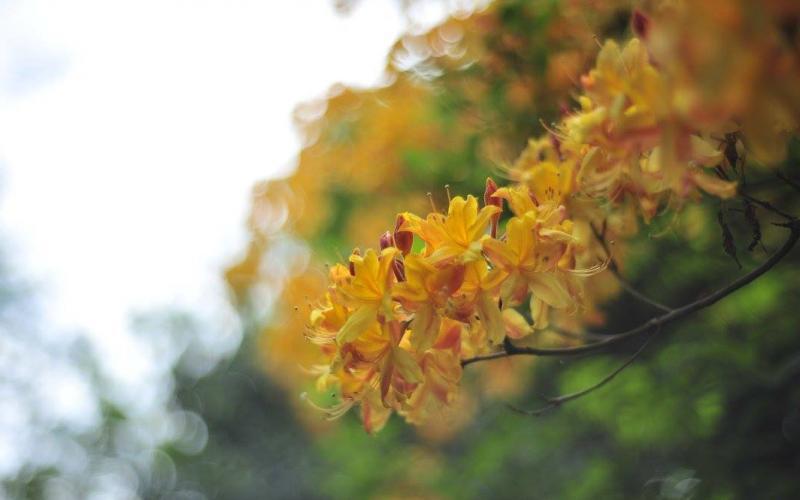
The Donald E. Davis Davis Arboretum is a collection of the native plants of the Southeastern US. It is a part of Auburn University's Department of Biological Sciences in the College of Science and Mathematics. The Arboretum is situated on 14 acres of the University's main campus and is currently celebrating its 50th anniversary. The garden has a strong focus on Alabama's plants and natural habitats. The core collections of the Arboretum include oaks, carnivorous plants and native azaleas. The Arboretum is actively involved in plant conservation through the Alabama Plant Conservation Alliance. The Arboretum has become a showcase for sustainable practices on campus including stormwater management. The Arboretum contains a branch of Town Creek that winds through the garden and is connected to a wide floodplain. Installations throughout the Arboretum teach patrons how our water is cared for using including raingardens, dry streambeds, berms, swales, pervious concrete, interpretative signage and a stormwater cellphone tour.
The Arboretum offers educational programming for all ages, and serves as an extension of the classrooms for most of the colleges on campus. Local school children and master gardeners share the opportunity to come immerse themselves in a variety of recreated environments and meet the plant communities associated with them. Visitors will find representations of Alabama's Coastal Dunes, Blackbelt prairies, Longleaf Pine Savannah's, Pitcher Plant Bogs, Sandstone Rock outcrops, Dolomitic Limestone Glades, and even shaded slopes from the foothills of the Appalachian Mountians. All of these installations are used to teach the volume and value of the immense biodiversity that grows in Alabama.
ArbNet, the Morton Register and the Accreditation Program are coordinated by The Morton Arboretum as an international initiative to support the work of arboreta in saving and planting trees.
Boerner Botanical Gardens Awarded Level II Accreditation
Boerner Botanical Gardens has been awarded a Level II Accreditation through the ArbNet program. By achieving particular standards of professional practices deemed important for arboreta and botanic gardens, they are now recognized amongst other professional public gardens in the Morton Register of Arboreta.
Here's how Boerner Botanical Gardens tells their story:
Boerner Botanical Gardens (BBG), part of the Gold Medal Milwaukee County Parks system, is the oldest nationally recognized public garden in the Great Lakes region. Built in the 1930's, the Gardens were developed as a cooperative effort between Milwaukee County Parks Department, the Civilian Conservation Corps (CCC), and the Works Progress Administration (WPA). Located within Whitnall Park, BBG is comprised of the forty acre formal gardens, and the Arboretum plantings along the parkways.
The Formal Gardens are comprised of outdoor "rooms" devoted to specialty gardens including the Rose Garden, Perennial Mall, Herb Garden, Shrub Mall, Peony Garden, Daylily Path, Annual Garden, and Rock Garden. The John Voight Memorial Trial Garden, established in 1953, is one of the few municipally operated trial gardens in the US, and is an official test site for All American Selections (AAS) and the American Garden Awards (AGW). It is also a test site for the Earth-Kind Rose Field Trials and the Earth-Kind Hydrangea Field Trials. The newest addition the Gardens is the Rain Water Harvest demonstration site, which captures parking lot runoff and biofilters and aerates the water for reuse.
The Gardens and Arboretum is host to many impressive plant collections, including Street Tree, Nut Tree, Tree Peony, and Conifer collections. Boerner Botanical Gardens is an American Hosta Society National Display Garden, and an American Hemerocallis Society Display Garden. The Rose Garden has about three hundred rose varieties, and over three thousand plants. The Peony Garden has upwards of one hundred and seventy five peony varieties. Of special note is the flowering Crabapple collection, which is one of the largest in the country.
The Education and Visitor Center was built in 2001-02 to provide the necessary space and amenities for the many visitors who come to Boerner Botanical Gardens to learn, enjoy, and escape. It includes classrooms, meeting halls, and a soaring glass atrium that brings some of the beauty of nature indoors. Great care was taken to match the exterior stonework of the Visitor's Center to the original Gardens headquarters, the Garden House. The Garden House includes features like hand hewn oak beams made by WPA craftsmen and unique animal carvings. Boerner Botanical Gardens is also home to many sculptures and unique stonework, much of it dating from 1930's WPA artists and artisans. The Gardens also feature contemporary sculptures and other artwork by area artists.
ArbNet, the Morton Register and the Accreditation Program are coordinated by The Morton Arboretum as an international initiative to support the work of arboreta in saving and planting trees.
The Morris Arboretum of the University of Pennsylvania Awarded Level IV Accreditation
The Morris Arboretum of the University of Pennsylvania has been awarded a Level IV Accreditation through the ArbNet program. By achieving particular standards of professional practices deemed important for arboreta and botanic gardens, The Morris Arboretum is now recognized amongst other professional public gardens in the Morton Register of Arboreta.
Here's how The Morris Arboretum tells their story:
Set on 166 acres at the outer edge of Philadelphia's Chestnut Hill neighborhood, the Morris Arboretum of the University of Pennsylvania Founded in 1887 as the private estate of siblings John and Lydia T. Morris. The arboretum was established in 1932 as a university-administered arboretum and public garden for research, education and horticultural display. It became the official Arboretum of the Commonwealth in 1988.
Today, the Morris Arboretum treats visitors to an ever-changing display of rare and beautiful plants and trees, all year long. It is a place of big trees, a place of beauty, a historic landscape, a scientific institution, a teaching garden, a place of art and architecture, and a place of peace and healing. At the arboretum, one discovers teaching, horticultural display, conservation and research.
The Arboretum assists communities and agencies throughout the state, region, and the United States. The magnificent garden displays showcase the region's best horticultural practices and plant selections. Arboretum staff lead plant collecting expeditions to Asia, Europe, and in the United States, seeking to increase and conserve the diversity of plants available for today's urban and community landscapes. Arboretum research on Pennsylvania's plants and plant communities, the Flora of Pennsylvania, is a vital resource for environmental stewardship. The Plants of Pennsylvania: An Illustrated Manual, written and researched by Morris Arboretum botanists Ann Rhoads and Timothy is a tool for the identification of the native and naturalized plants of the state.
The Morris Arboretum's collection of scientifically documented plants began in the late 1800's. More than 12,000 labeled plants of over 2,500 types from the temperate areas of North America, Asia, Africa, and Europe make its living collection. Some of these were collected by Arboretum founders, John and Lydia Morris, from their travels around the world. Plants collected in China by E.H. Wilson in the later 1800's and early 1900s form the foundation of the historic Asian collection. Significant plant collections include conifers, hollies, magnolia, oaks, maples, roses, flowering cherries, and witchhazels.
The Morris Arboretum encourages active participation in the garden with its members. Arboretum members provide over five hundred Arboretum volunteers. Educational programs, from floral and landscape design to painting in the outdoors, are offered to the general public, while professional arborists can take courses in such specialized techniques as tree cabling and bracing.
The Arboretum remains an important regional open space and a national example of a Victorian eclectic garden. The Arboretum is listed on the National Register of Historic Places and is accredited by the American Association of Museums.
ArbNet, the Morton Register and the Accreditation Program are coordinated by The Morton Arboretum as an international initiative to support the work of arboreta in saving and planting trees.
Westonbirt, The National Arboretum Awarded Level IV Accreditation
Westonbirt, The National Arboretum in England has been awarded a Level IV Accreditation through the ArbNet program. By achieving particular standards of professional practices deemed important for arboreta and botanic gardens, Westonbirt, which in managed by the Forestry Commission is now recognized amongst other professional public gardens in the Morton Register of Arboreta.
Here's how Westonbirt tells their story:
Westonbirt, The National Arboretum is a remarkable place for people to enjoy and learn about trees. Its combination of maturity, species diversity and landscape style make it one of the most extraordinary arboretums in the world with an iconic status in our tree and landscape heritage. The tree collection itself contains around 16,000 catalogued trees and shrubs from 3000 plant taxa. There are also 5 National Plant Collections including Japanese maples for which the arboretum is so well known.
Created in the 19th Century by Victorian entrepreneur Robert Holford, the 240 hectare (600 acre) arboretum was planted during the period of unprecedented introduction and availability of new plants to UK growers. Holford's wealth allowed him access to these newly introduced species and his arboretum is an extravagant expression of his passion for trees. Laid out in a relatively short period, the treescape owes much to the earlier Picturesque landscape style and Holford's regard for and adherence to the landscape principles of William Sawrey Gilpin.
Since 1956 the arboretum has been managed as a public institution by The Forestry Commission. As such it has taken on a broad range of objectives from plant conservation and scientific research to recreation and learning. The arboretum's mission to Connect People with Trees to Improve the Quality of Life encompasses these broad objectives and reflects its inclusive ethos.
In 1985, the Friends of Westonbirt Arboretum charity was formed to support the Forestry Commission. The charity has since gone on to become a major membership organisation providing significant financial and practical contributions.
In 2001, Westonbirt was awarded the status of National Arboretum, further emphasising both the quality of the tree collection and the exemplary maintenance and curation that underline its value as a reference collection of temperate trees and shrubs. The arboretum's tree collection and woodland areas have contributed to a wide range of scientific research programmes. The growing threats to trees and forests from climate change and pests and disease have prompted a reaffirmation of the arboretum's value for understanding these threats and developing appropriate responses.
As well as the tree collection itself, Westonbirt Arboretum is a popular visitor attraction with around 400,000 visitors a year. It also supports a range of educational programmes and learning activities. Some of these cater for specific users while others provide the means by which all visitors have the opportunity to learn more about the arboretum and the wider world of trees. The latter includes guided walks and interpretation of many kinds including (increasingly) electronic and web-based media such as social media and blogs. Our work to raise public understanding of the environment issues relating to trees is perhaps the most significant contribution the arboretum makes to plant conservation.
ArbNet, the Morton Register and the Accreditation Program are coordinated by The Morton Arboretum as an international initiative to support the work of arboreta in saving and planting trees.